
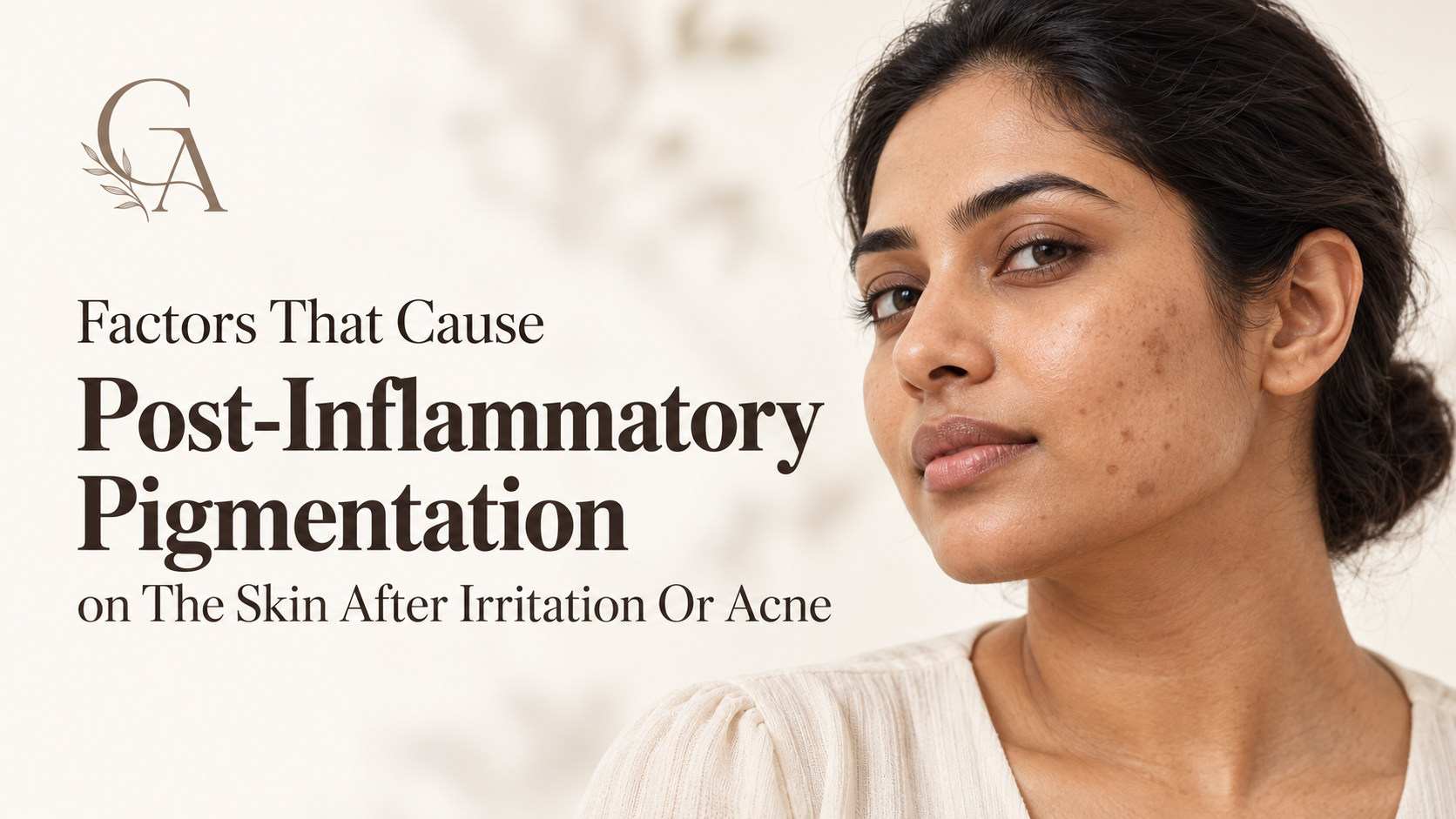
Post-inflammatory hyperpigmentation, also called PIH, tends to appear after skin irritation or an acne breakout. They can be smooth and sometimes may cause changes to the skin’s texture. These patches tend to last for around a few weeks, but some may last for months or a year, depending on the severity of the condition. It's frustrating to wake up every day, look in the mirror, and see stubborn patches on the skin.
It's high time you address these dark marks the right way with the help of this post-inflammatory hyperpigmentation acne guide blog. It explains the causes of the dark marks and the treatments to explore.
What do post-inflammatory hyperpigmentation marks look like?
Post-inflammatory hyperpigmentation marks are patches that appear on the skin after a wound heals or after a scar. These patches are flat, and the colour is dependent on the individual’s skin tone. PIH can occur on any type of skin tone and can last a long time, especially on skin with medium to dark tones. PIH can occur when the skin becomes inflamed from an irritation, rash or wound. It starts to develop as the skin heals, during which it starts to produce melanin. It can be triggered by
- Sunburn
- Chemical peels
- Dermabrasions
- Laser resurfacing
What causes dark marks to last long after acne breakouts or irritation?
Depth of inflammation
Superficial irritation causes light damage to the skin, which is in the upper skin layer (epidermis), and it may fade away in a few weeks or months, but triggers like cystic acne or severe burns cause deep trauma that goes deep into the dermis, causing pigmentation to last for a longer duration.
Severity and duration of the trigger
Mild pimples do not cause serious damage; the condition gets worse when the pimples are scratched, squeezed or popped, causing the inflammation to go deeper, which leads to darker pigmentation.
Melanin activity and skin tone
The case is different with skin tones that have rich melanin. When the skin experiences irritation, it overreacts and starts to produce extra melanin, which causes darker and deeper pigmentation that makes it persistent and lasts longer.
Ongoing UV exposure
Continuous exposure to Ultraviolet light stimulates the production of melanocytes, which keeps them active to continuously darken, causing a prolonged process for the pigmentation to fade.
Persistent internal triggers
In some cases, there are hormone-like shifts that can keep pigment production active after the irritation stops, which leads to a prolonged period for the pigmentation to start fading.
How can I treat persistent dark spots after acne or irritation?
There is a range of treatments provided; the first step is to undergo diagnosis so that you can know the severity of the condition and the dermatologist can guide you on effective treatments. Here are various treatment options;
Essential daily protection
Application of a broad-spectrum sunscreen: One of the effective ways to stop stimulating melanocytes, which cause pigmentation, is by applying sunscreen of at least SPF 30 every day.
Control underlying inflammation: To stop persistent pigmentation is to treat the underlying cause. Undergo a diagnosis of what causes irritations or the acne breakout.
Topical treatments
Hydroquinone: This is a skin bleaching agent that should be used under a doctor’s guidance.
Retinoids: They help to speed up cell turnover, which is needed for pigmentation shedding.
Azelaic acid: It is an effective anti-inflammatory and brightening component that can be used for active acne.
Vitamin C: This is an effective antioxidant that is used for lightening dark spots and brightening overall skin tone.
In-office procedures
Chemical peels: This is a treatment that involves the use of salicylic acid and glycolic acid to treat the upper layer of the skin by exfoliating to lift pigmentation.
Laser therapy: This treatment is prescribed to treat deep pigmentation and should be carefully prescribed by a dermatologist because an error causes further pigmentation.
Bottom line
Inasmuch as post-inflammatory pigmentation does not cause any pain, it has a way of affecting one’s appearance. If you are battling these dark marks and are tired of them, the first step is to know why they keep occurring, then proceed to know how best you can treat the underlying causes.
Trying out different treatments randomly is not an effective way, which is why, before starting your journey to treating post-inflammatory hyperpigmentation acne in Chestermere, seek the right professional guidance from dermatologists. Glore Aesthetic provides a range of treatments for dark marks where you can receive the right guidance on the right skincare that is effective for your skin type, and you can have post-inflammatory hyperpigmentation acne questions answered.
Post-inflammatory hyperpigmentation, also called PIH, tends to appear after skin irritation or an acne breakout. They can be smooth and sometimes may cause changes to the skin’s texture. These patches tend to last for around a few weeks, but some may last for months or a year, depending on the severity of the condition. It's frustrating to wake up every day, look in the mirror, and see stubborn patches on the skin.
It's high time you address these dark marks the right way with the help of this post-inflammatory hyperpigmentation acne guide blog. It explains the causes of the dark marks and the treatments to explore.
What do post-inflammatory hyperpigmentation marks look like?
Post-inflammatory hyperpigmentation marks are patches that appear on the skin after a wound heals or after a scar. These patches are flat, and the colour is dependent on the individual’s skin tone. PIH can occur on any type of skin tone and can last a long time, especially on skin with medium to dark tones. PIH can occur when the skin becomes inflamed from an irritation, rash or wound. It starts to develop as the skin heals, during which it starts to produce melanin. It can be triggered by
- Sunburn
- Chemical peels
- Dermabrasions
- Laser resurfacing
What causes dark marks to last long after acne breakouts or irritation?
Depth of inflammation
Superficial irritation causes light damage to the skin, which is in the upper skin layer (epidermis), and it may fade away in a few weeks or months, but triggers like cystic acne or severe burns cause deep trauma that goes deep into the dermis, causing pigmentation to last for a longer duration.
Severity and duration of the trigger
Mild pimples do not cause serious damage; the condition gets worse when the pimples are scratched, squeezed or popped, causing the inflammation to go deeper, which leads to darker pigmentation.
Melanin activity and skin tone
The case is different with skin tones that have rich melanin. When the skin experiences irritation, it overreacts and starts to produce extra melanin, which causes darker and deeper pigmentation that makes it persistent and lasts longer.
Ongoing UV exposure
Continuous exposure to Ultraviolet light stimulates the production of melanocytes, which keeps them active to continuously darken, causing a prolonged process for the pigmentation to fade.
Persistent internal triggers
In some cases, there are hormone-like shifts that can keep pigment production active after the irritation stops, which leads to a prolonged period for the pigmentation to start fading.
How can I treat persistent dark spots after acne or irritation?
There is a range of treatments provided; the first step is to undergo diagnosis so that you can know the severity of the condition and the dermatologist can guide you on effective treatments. Here are various treatment options;
Essential daily protection
Application of a broad-spectrum sunscreen: One of the effective ways to stop stimulating melanocytes, which cause pigmentation, is by applying sunscreen of at least SPF 30 every day.
Control underlying inflammation: To stop persistent pigmentation is to treat the underlying cause. Undergo a diagnosis of what causes irritations or the acne breakout.
Topical treatments
Hydroquinone: This is a skin bleaching agent that should be used under a doctor’s guidance.
Retinoids: They help to speed up cell turnover, which is needed for pigmentation shedding.
Azelaic acid: It is an effective anti-inflammatory and brightening component that can be used for active acne.
Vitamin C: This is an effective antioxidant that is used for lightening dark spots and brightening overall skin tone.
In-office procedures
Chemical peels: This is a treatment that involves the use of salicylic acid and glycolic acid to treat the upper layer of the skin by exfoliating to lift pigmentation.
Laser therapy: This treatment is prescribed to treat deep pigmentation and should be carefully prescribed by a dermatologist because an error causes further pigmentation.
Bottom line
Inasmuch as post-inflammatory pigmentation does not cause any pain, it has a way of affecting one’s appearance. If you are battling these dark marks and are tired of them, the first step is to know why they keep occurring, then proceed to know how best you can treat the underlying causes.
Trying out different treatments randomly is not an effective way, which is why, before starting your journey to treating post-inflammatory hyperpigmentation acne in Chestermere, seek the right professional guidance from dermatologists. Glore Aesthetic provides a range of treatments for dark marks where you can receive the right guidance on the right skincare that is effective for your skin type, and you can have post-inflammatory hyperpigmentation acne questions answered.
Frequently Asked Questions
My dark mark just got worse; what is causing it?
It can be due to extra production of melanin, hormonal shifts and continuous sun exposure.
Describe the process of laser therapy?
The specialist uses focused light energy on the targeted area to break down excess melanin and speed up cellular turnover.
How long does the chemical peel last?
The duration is dependent on the depth of the pigmentation; it may take around 2 months. Deep peels can take 6 months or require consistent treatment for a lifetime.
Am I supposed to reapply sunscreen this day?
This is dependent on whether you are mostly indoors or outdoors. Indoors does not require you to reapply, whilst if outdoors, you would have to reapply.
How long does the topical treatment take to start seeing results?
It may take around 4 to 12 weeks to start seeing results as the dark spots start to fade, whilst full resolution can take around 6 months or a year.
