Have you ever noticed that your acne is gone, but dark marks stay behind, or you may be struggling with sun exposure and skin irritation, leaving dark patches that make your skin look uneven? You don't get any positive results, no matter how consistent your skincare routine is. Dark spots can be stubborn and don't go away quickly with brightening creams and serums; then the last option left is professional treatments such as microneedling vs chemical peel.
These professional treatments are effective in improving hyperpigmentation, but the methods are different. You need to choose the right method according to your skin type and acne scar type. Chemical peels help to fade the dark spots, while microneedling supports skin renewal and also helps to improve the texture, but the question is: which treatment gives results faster? This blog will help you understand the microneedling vs. chemical peel differences.
Basics Of Microneedling And Chemical Peels
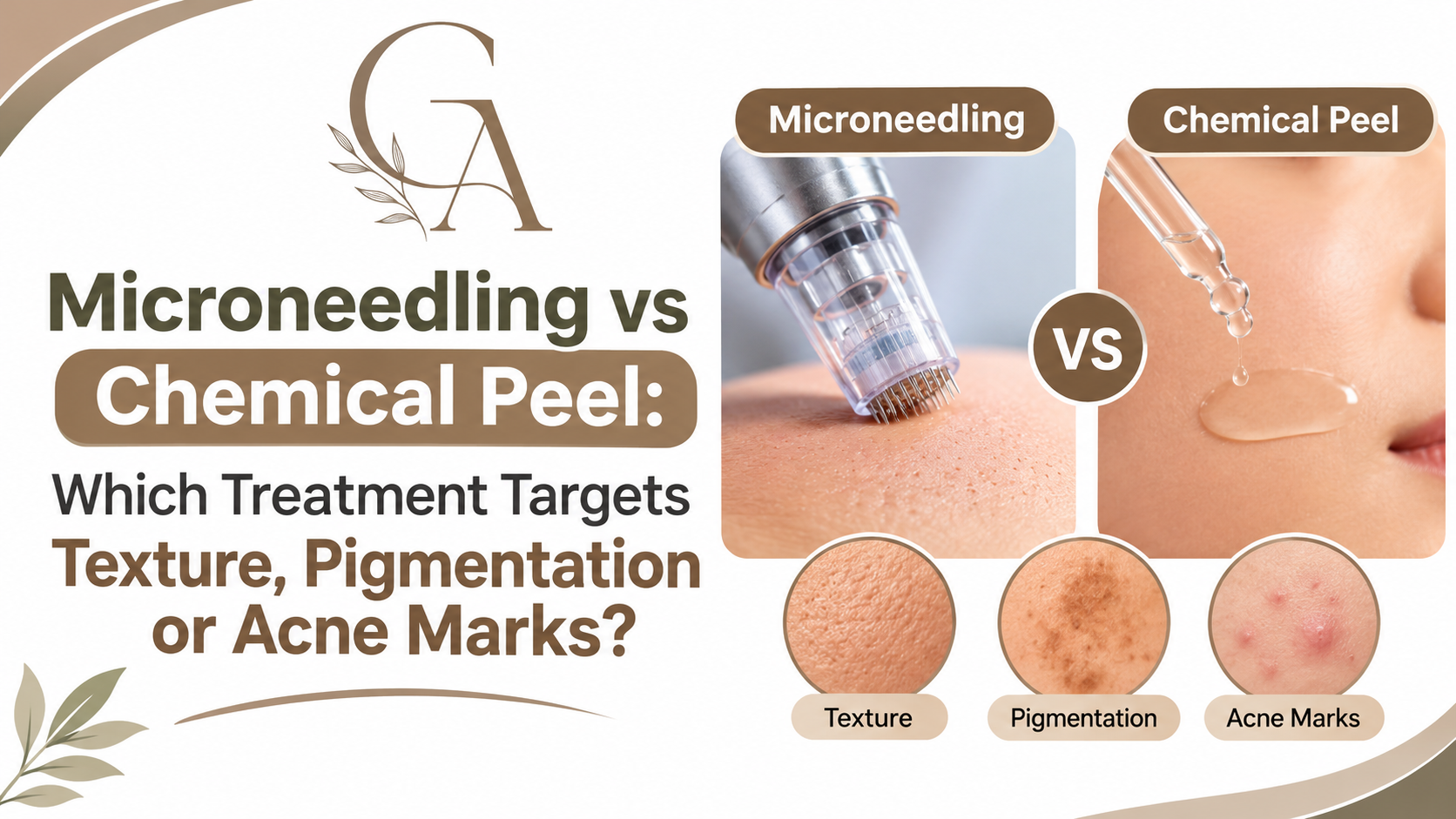
These cosmetic treatments are useful to make your skin healthy and manage different skin issues that can affect your appearance and confidence. The difference between microneedling and chemical peels is that microneedling increases collagen and elastin production in the skin, whereas chemical peels are used to exfoliate and remove the damaged layer of the skin.
How Microneedling Works
Microneedling is a cosmetic procedure called collagen induction therapy in which a device with fine needles is used to create thousands of microscopic channels in the skin. These tiny injuries in the skin help to promote your body’s natural response to rebuild collagen and elastin. This approach works at the structural level, as it is especially effective for acne scarring or depressed scars rather than just surface discoloration.
How Chemical Peeling Works
A different approach is applied in chemical peeling than in microneedling, as it is an exfoliating solution used to remove the damaged outer layers of the skin. Different varieties of chemical peels are available, which are used to treat different everyday issues such as dullness and pigmentation.
These procedures depend on your skin health and the body’s own repair process to produce results, and that is why none of the procedures deliver an instant transformation.
Which Treatment Is Best And Safer For Darker Skin Tones?
- Dark skin requires a gentle approach
- Strong treatments can increase irritation risks.
- With the help of appropriate methods, microneedling may be effective.
- Chemical peels should be associated with your skin type.
- Skin tone and sensitivity should be assessed first
- Sunscreen and aftercare are important
- Professional guidance is necessary to reduce risks
Microneedling May Be a Better Option If You Are Experiencing:
- With acne scars involving actual texture changes
- A treatment required to treat the actual cause of scars as they are formed.
Chemical Peeling May Be Effective If:
- If you are struggling with dullness.
- When you need a treatment that targets pigment and surface tone more effectively.
- When you want to go for both a peel for tone and microneedling for deeper texture.
How Much Time Do These Treatments Take?
Microneedling:
- Using topical anesthetic, the treatment becomes more comfortable treatment
- You may experience redness after the procedure for two to three days.
- It is necessary to avoid makeup for at least two to three days.
Chemical peeling:
- Comfort and time may vary according to peel depth.
- You may not experience any discomfort for lighter peeling.
- More noticeable redness in deeper peels.
Both treatments require some aftercare, including sun protection to support healing, and you may not require more leave from work, but one or two days are required for visible redness.
Conclusion
In this modern era, due to a stressful lifestyle, people are facing skin problems that influence skin issues such as dark spots and pigmentation. To manage these issues, a wide variety of treatments are available in the cosmetic world, from simple cleaning facials to chemical treatments such as chemical peeling and microneedling.
Both treatments have their own advantages; therefore, chemical peeling may provide faster visible brightening for pigmentation. The effective results you can get depend on choosing the right treatment according to your skin type and overall skin goals. Microneedling is a more effective treatment when you want to treat acne marks and enlarged pores.
If you are facing problems that are associated with skin and don't know whether to choose microneedling or chemical peeling, you can choose the best option that is based on your skin and budget. You can book an appointment with Glore Aesthetic, the best beauty salon in Chestermere, for the best consultation.
Frequently Asked Questions
To fade dark spots, which treatments are chosen by professionals?
Microneedling is suitable for pigmentation with acne marks, while chemical peeling is good for discoloration. But the treatment option depends on your skin type and dark spots
In how many sessions can my pigmentation issue be managed?
There is no fixed number of sessions for everyone because the number of sessions depends on your type of pigmentation and skin type.
How long do I have to wait to wear makeup after treatment?
To heal your skin and protect it from any irritation, you should avoid makeup for a minimum of two to three days.
Do professionals combine both chemical peeling and microneedling for treatment?
Yes, a combination of both treatments can be used as per customer requirements; however, these two treatments can be used separately to allow proper healing